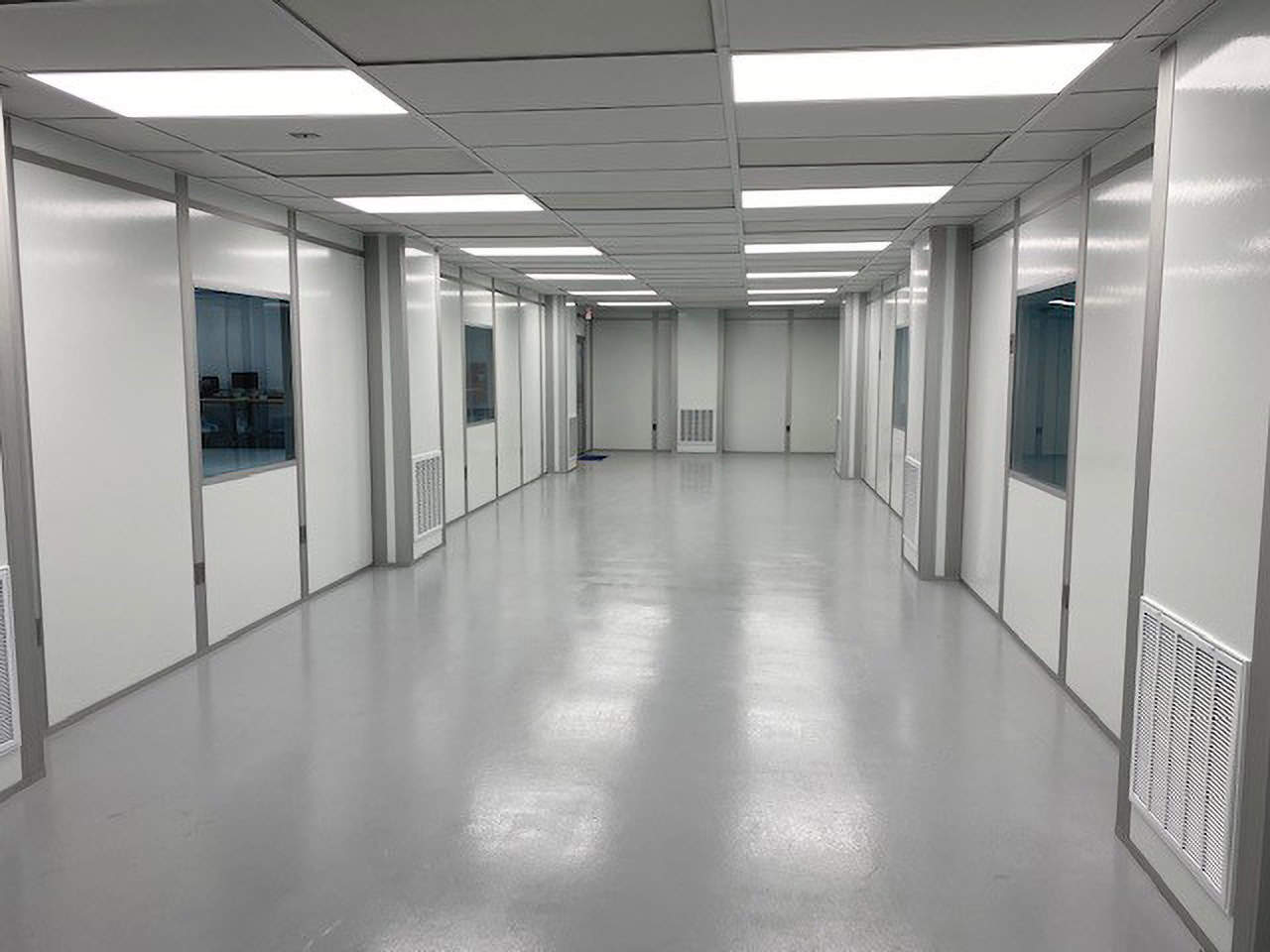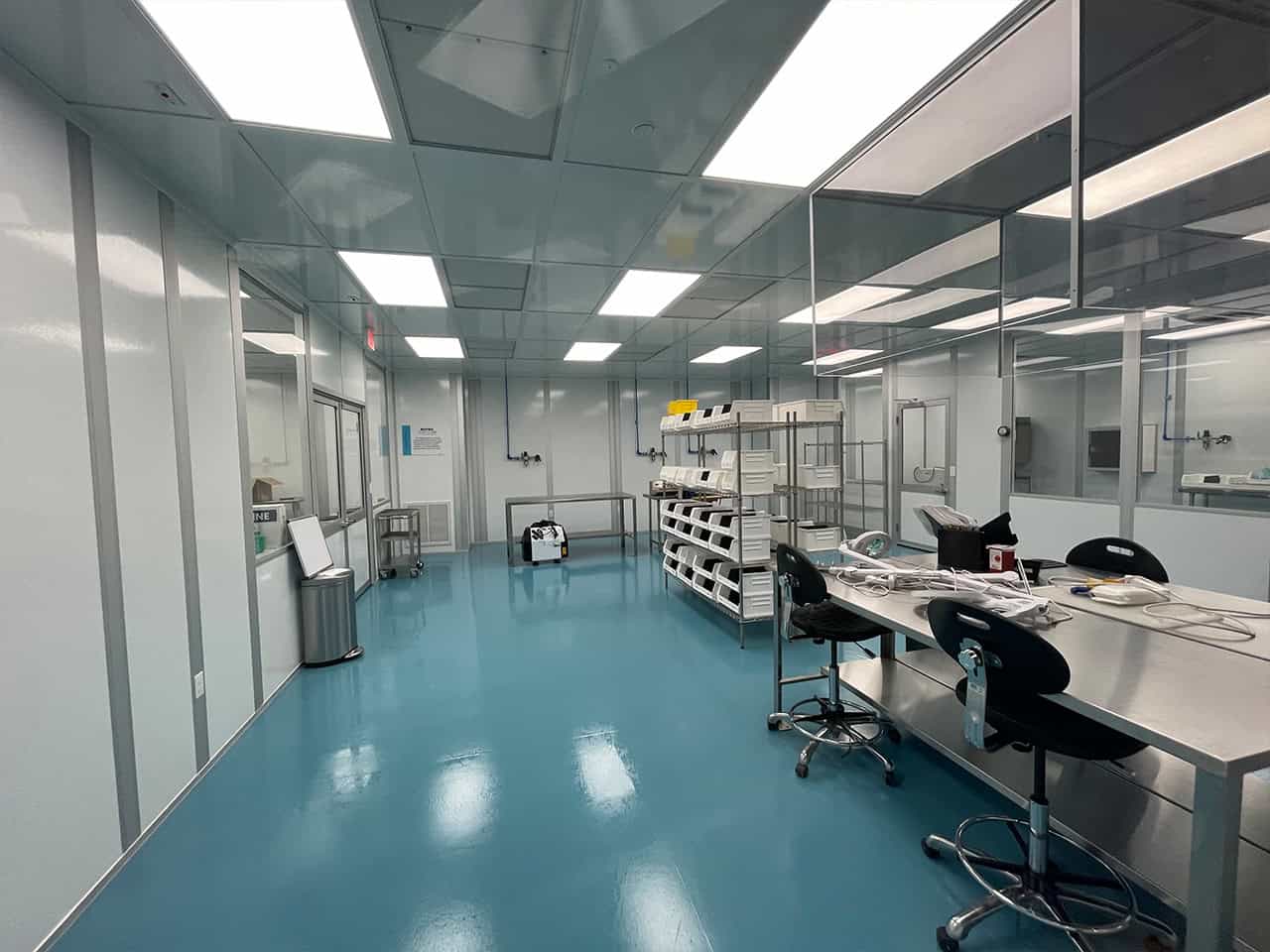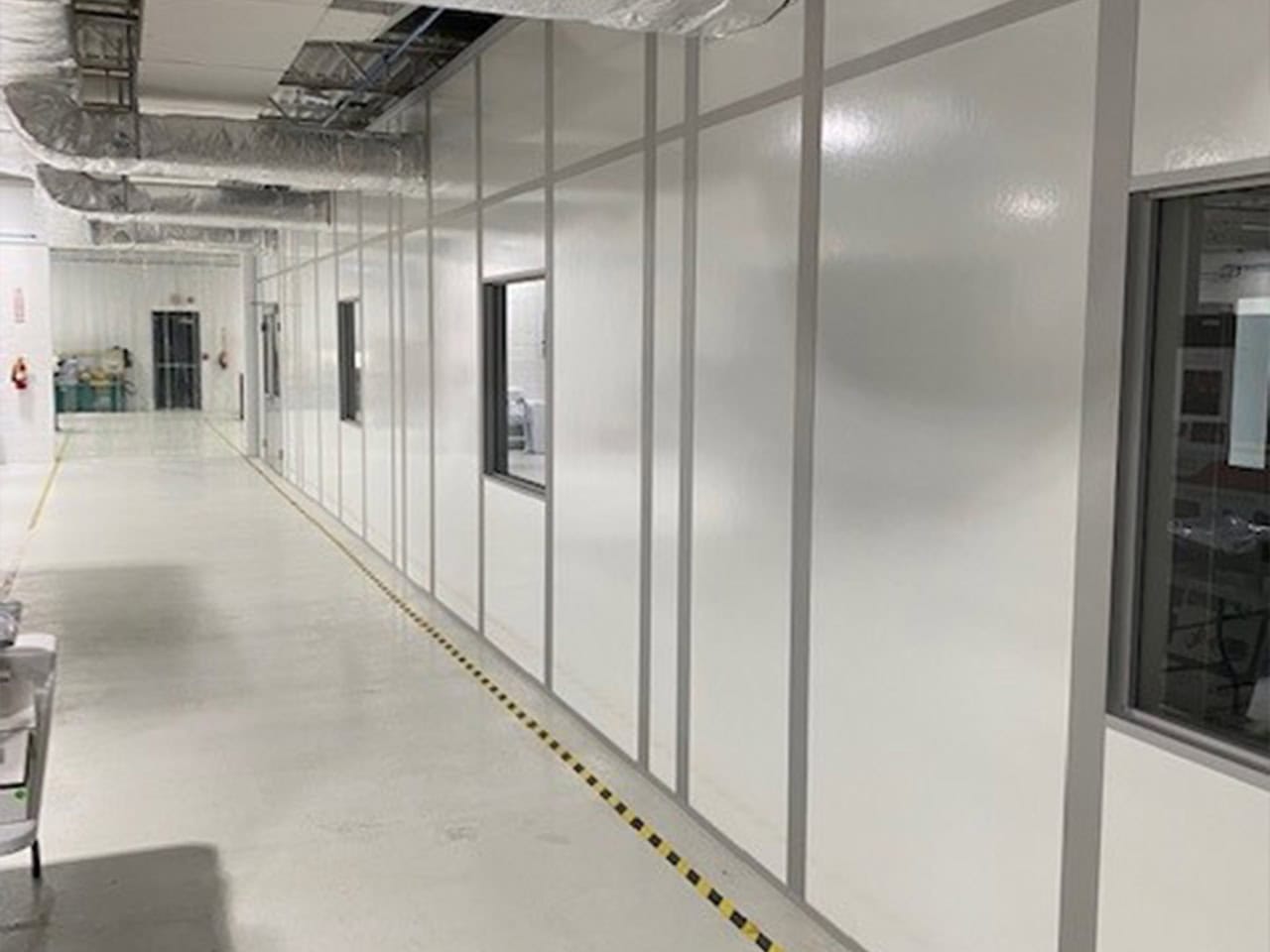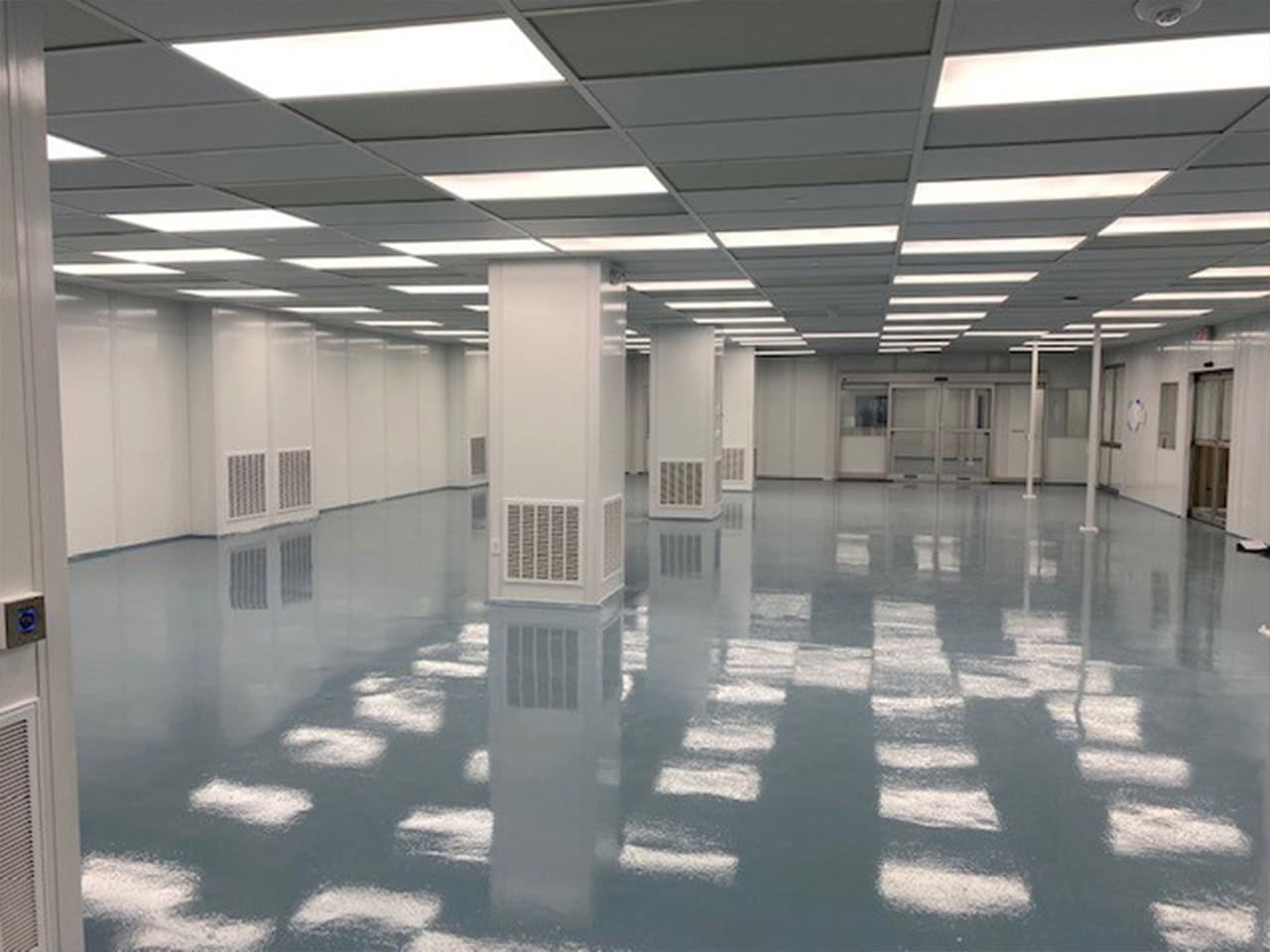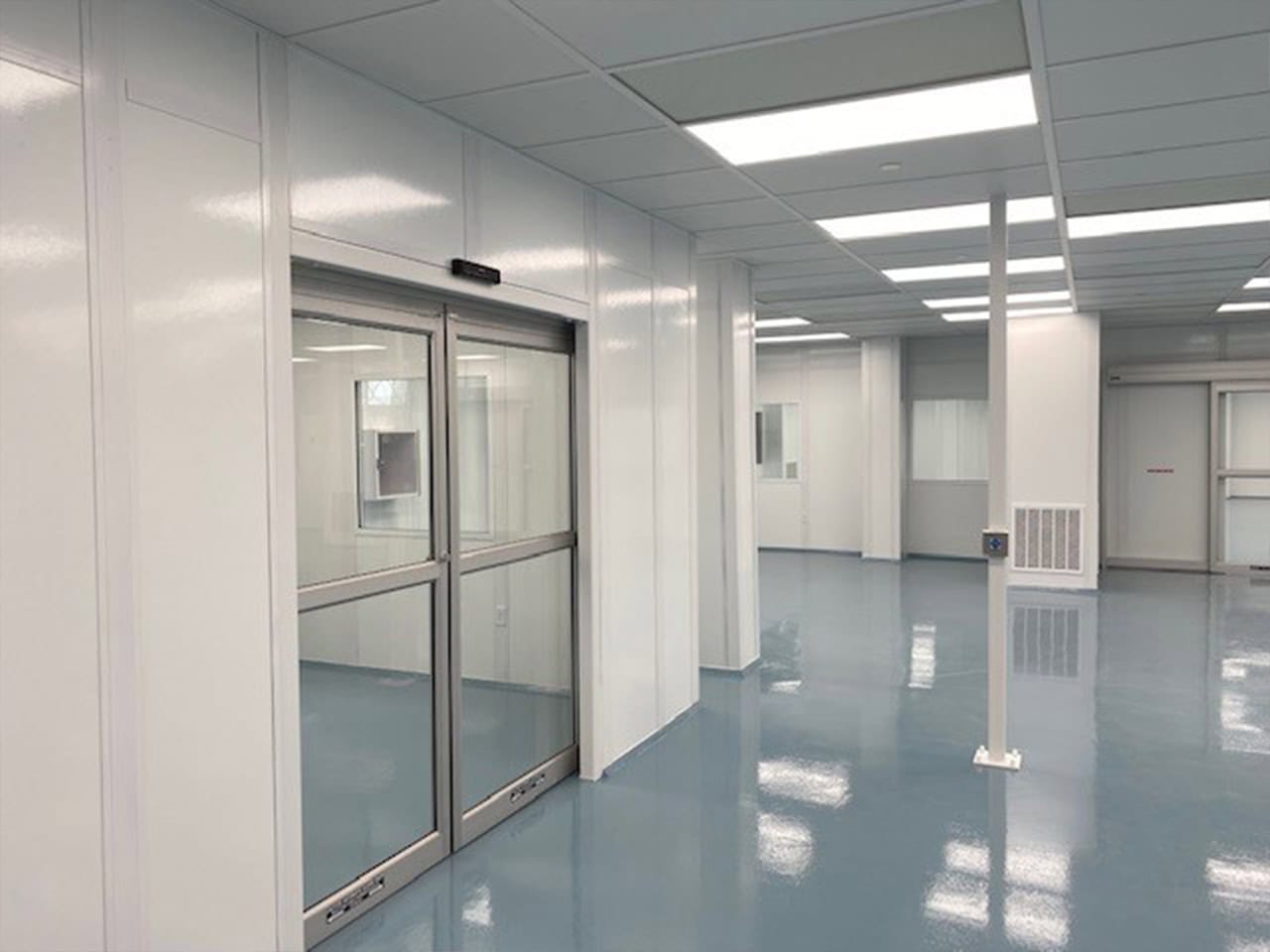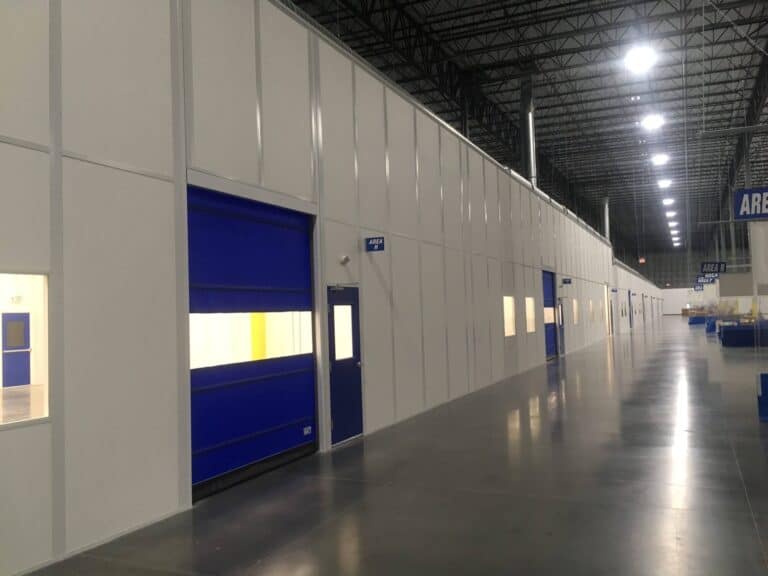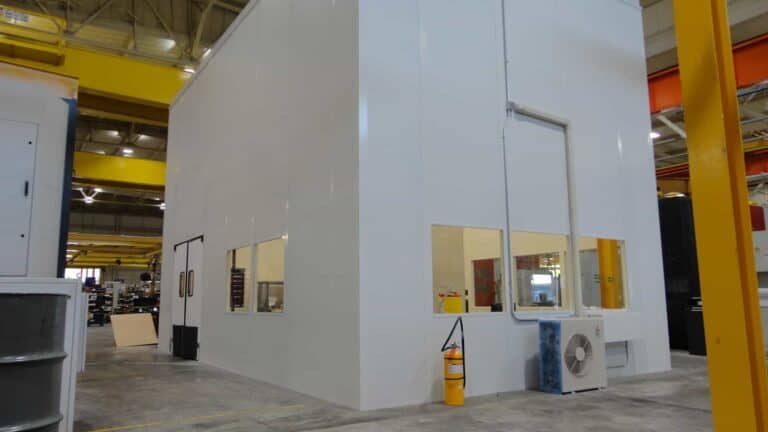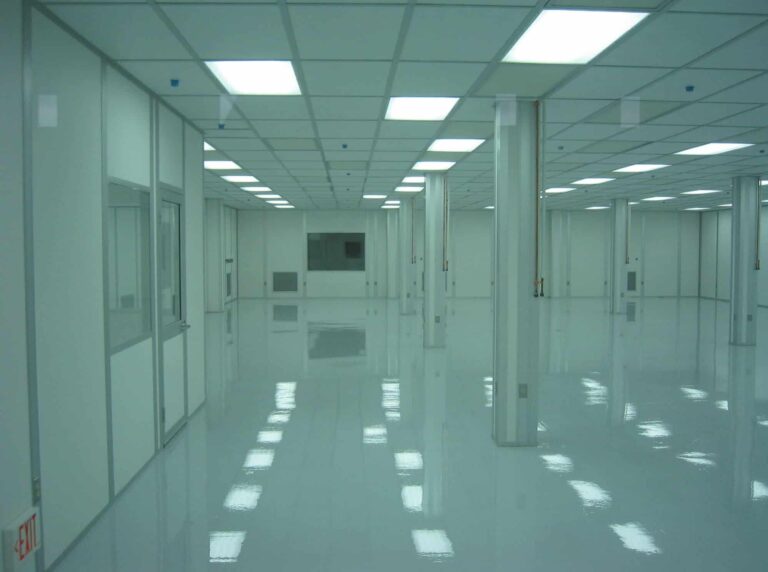

Porta-King manufactures modular cleanrooms classified to ISO 5, 6, 7, and 8 standards for pharmaceutical, medical device, semiconductor, food packaging, and precision manufacturing environments. Built in our Earth City, Missouri facility and shipped nationwide, our prefabricated cleanroom systems install in a fraction of the time of conventional construction — without the dust, debris, and operational disruption of a traditional build.
Each cleanroom is engineered around the application: wall panels from 1¾” to 8″ thick, non-shedding finishes including painted steel, HPL, PVC, and FRP, integrated HEPA fan filter units, and full mechanical system coordination. Hardwall, softwall, and hybrid construction options are available depending on classification requirements, room size, and budget.
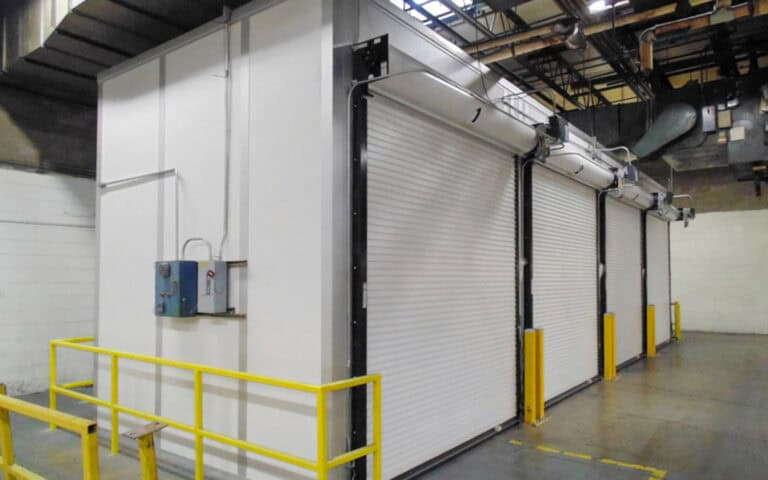
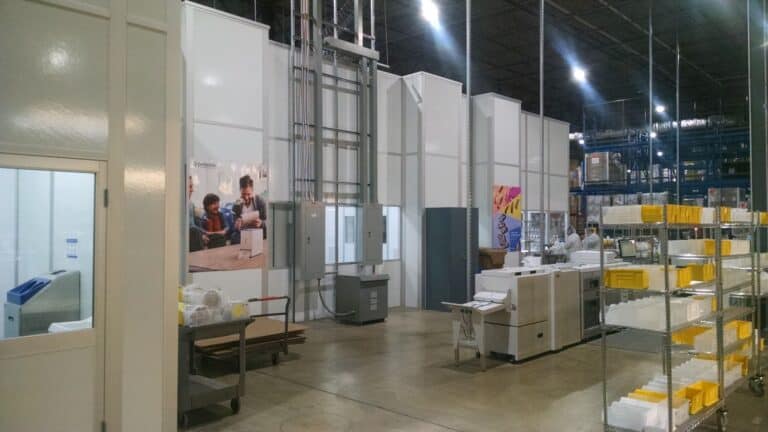
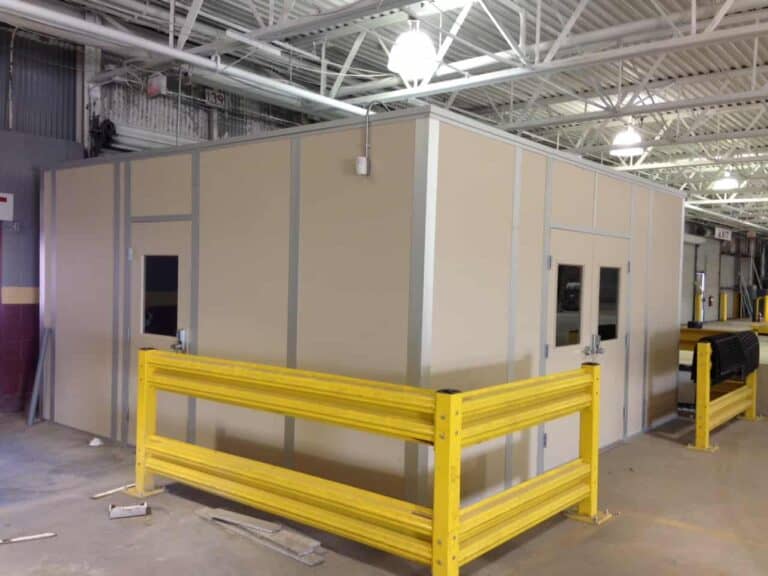
Porta-King has delivered cleanrooms for medical device packaging, nutritional supplement manufacturing, USDA inspection at U.S. ports, and ISO 7 controlled environments for sensitive electronics. For applications requiring third-party ISO certification, we partner with cleanroom specialists nationwide to deliver turnkey solutions.
Modular Cleanroom ISO Classifications
ISO 14644-1 defines cleanroom cleanliness by the maximum allowable concentration of airborne particles per cubic meter of air. The lower the ISO class number, the cleaner the environment. Porta-King designs and manufactures modular cleanrooms across the four classifications most commonly required in commercial and industrial applications: ISO 5, ISO 6, ISO 7, and ISO 8.
The right classification for your application depends on three factors: the regulatory or quality standard your industry must meet, the sensitivity of the materials or processes inside the cleanroom, and the air change rate and filtration the room must sustain. We work through these requirements during the design phase to specify wall systems, HEPA filtration, air handling, and finishes that meet the target classification.
ISO 5 Cleanrooms (Class 100)
ISO 5 cleanrooms permit no more than 3,520 particles ≥0.5 microns per cubic meter — among the cleanest classifications used in commercial manufacturing. ISO 5 environments are typically required for sterile pharmaceutical fill-finish operations, aseptic compounding under USP 797 and USP 800, semiconductor wafer fabrication, microelectronics assembly, and certain medical device manufacturing processes. Achieving ISO 5 requires high HEPA filtration coverage, carefully engineered airflow patterns, and tightly controlled gowning and entry protocols. Modular construction is well-suited to ISO 5 builds where rapid deployment, future flexibility, or minimized site disruption are priorities.
ISO 6 Cleanrooms (Class 1,000)
ISO 6 cleanrooms permit up to 35,200 particles ≥0.5 microns per cubic meter. They are common in pharmaceutical manufacturing support areas, biotech research, optical assembly, and precision medical device production. ISO 6 environments require substantial HEPA filtration coverage and elevated air change rates relative to lower-classification spaces. Many facilities use ISO 6 as a buffer or anteroom space adjacent to ISO 5 production areas, with modular construction allowing the two classifications to be built and integrated as a single coordinated system.
ISO 7 Cleanrooms (Class 10,000)
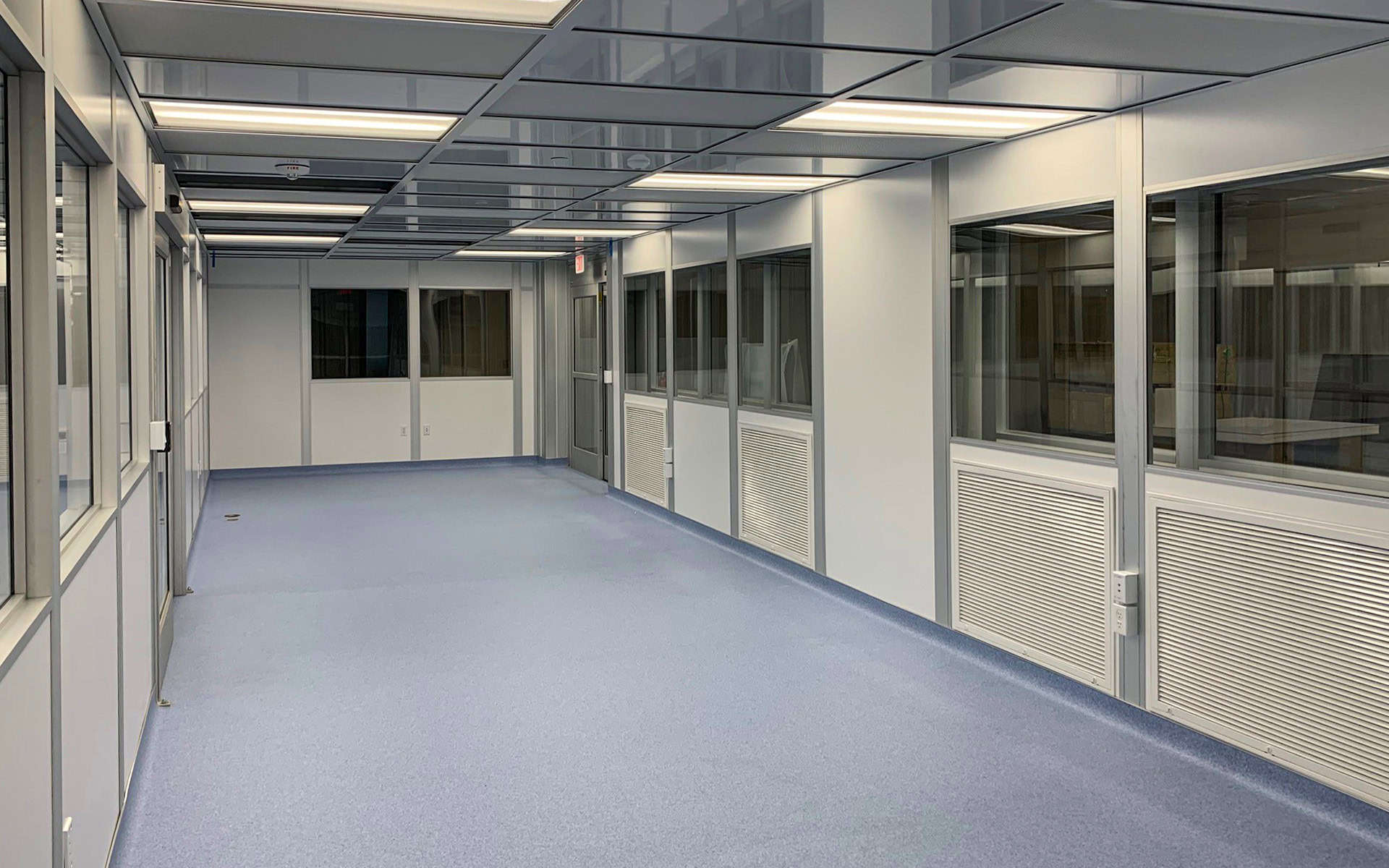
ISO 7 cleanrooms permit up to 352,000 particles ≥0.5 microns per cubic meter and represent one of the most commonly specified cleanroom classifications for medical device manufacturing, pharmaceutical secondary packaging, biotechnology, and electronics assembly. ISO 7 is widely referenced in cGMP-compliant manufacturing for many medical device and pharmaceutical applications. Porta-King has built ISO 7 modular cleanrooms with FRP wall finishes, sealed plenum ceilings, and fan-powered HEPA filtration for facilities producing sensitive electronics, pharmaceutical components, and biotech equipment. HEPA filtration coverage and air change rates are engineered for each project based on the room size, internal heat load, and process requirements.
ISO 8 Cleanrooms (Class 100,000)
ISO 8 cleanrooms permit up to 3,520,000 particles ≥0.5 microns per cubic meter and are widely used in medical device packaging, nutraceutical and supplement manufacturing, food processing, cosmetics production, and general controlled-environment manufacturing. ISO 8 is often the right classification when the application requires meaningful contamination control without the stringency of higher-class environments — making it the most cost-effective classification for many commercial manufacturers. Porta-King’s ISO 8 modular cleanrooms have been deployed for medical device packaging operations and nutritional supplement manufacturing, including the cleanroom complex built for Atrium Innovations for production of Garden of Life® and Pure Encapsulations® brands.
ISO Cleanroom Particle Count Standards
The table below summarizes the maximum allowable airborne particle concentrations per cubic meter for each ISO classification, along with the equivalent FED STD 209E classification still referenced in some legacy specifications.
Modular Cleanroom Construction for Sensitive Materials
Porta-King’s modular prefabricated cleanrooms perform just as well as conventionally built cleanrooms with several advantages:
- Precut components for much cleaner initial set up. No need to put up barriers to contain dust and debris common with conventional construction.
- Faster initial set up to start cleanroom operation.
- Flexibility to change as space or application requirements change.
We offer a wide range of construction options to facilitate the design of your cleanroom:
- Different framing and connection methods for panel assembly. This includes aluminum framed systems or tongue and groove side panel connection methods.
- A wide array of wall surface finishes like Painted Steel, HPL, PVC and other durable, non-shedding surfaces.
- Custom wall compositions to address thermal ratings and sound attenuation requirements.
- Panel thickness ranging from 1 ¾” to 8” to address a range of cleanroom applications. Wall thickness is a factor for a range of design criteria including roof loads, wall height, insulation and sound control.
Based upon these and other design considerations, Porta-King’s experienced team of outside sales support, engineers, and customer service representatives are ready to assist you with your next cleanroom project. Our services include:
- System design for space planning
- Mechanical system integration
- Site condition analysis
- Installation
| CLASS | maximum particles/m3 | FED STD 209E equivalent | |||||
| >=0.1 um | >=0.2 um | >=0.3um | >=0.5 um | >=1 um | >=05 um | ||
| ISO 1 | 10 | 2 | |||||
| ISO 2 | 100 | 24 | 10 | 4 | |||
| ISO 3 | 1,000 | 237 | 102 | 35 | 8 | Class 1 | |
| ISO 4 | 10,000 | 2,370 | 1,020 | 352 | 83 | Class 10 | |
| ISO 5 | 100,000 | 23,700 | 10,200 | 3,520 | 832 | 29 | Class 100 |
| ISO 6 | 1,000,000 | 237,000 | 102,000 | 35,200 | 8,320 | 293 | Class 1,000 |
| ISO 7 | 352,000 | 83,200 | 2,930 | Class 10,000 | |||
| ISO 8 | 2,520,000 | 832,000 | 29,300 | Class 100,000 | |||
| ISO 9 | 35,200,000 | 8,320,000 | 239,000 | Room Air | |||
Modular Cleanroom Video Gallery
This is the second Cleanroom complex that we’ve built for this customer. The rooms were designed to meet ISO8 Standards for use in the Medical Device Packaging Industry. The wall finish is smooth FRP. Sealed decking at top to create a plenum above the ceilings. Fan powered HEPA filters provide the required ISO8 air changes and room cleanliness.
The modular clean room described herein is a cutting-edge facility designed to meet ISO Class 7 standards, ensuring an environment conducive to sensitive manufacturing processes. With dimensions of 15′ x 62′ x 12′ tall, this room provides ample space for precision activities while maintaining a controlled atmosphere. Constructed with meticulous attention to cleanliness, the clean room features a white fiberglass-reinforced plastic finish (FRP) on both the interior and exterior wall surfaces. This finish not only enhances the room’s aesthetic appeal but also serves a functional purpose by facilitating easy cleaning and maintaining a sterile environment. The fiberglass reinforcement adds durability, ensuring the longevity of the clean room.
The modular design of this facility offers flexibility, allowing for efficient customization based on specific operational requirements. The controlled environment is crucial for industries such as pharmaceuticals, electronics, and biotechnology, where even minute particles can compromise the integrity of the manufacturing process.
Modular Cleanroom Construction vs. Conventional Build
Manufacturing operations require clean environments to ensure quality and optimize production output, and laboratories rely on clean space to improve output for their experiments and research. Hospitals need to remain clean for health and safety reasons, and manufacturing operations require clean environments to ensure quality and optimize production output. Laboratories rely on clean space to improve output for their experiments and research. Using modular construction helps to achieve all of these goals by providing easy to construct affordable prefabricated cleanrooms.
Frequently Asked Questions
What is a modular cleanroom used for?
Cleanrooms are used to create a controlled environment, filtering out pollutants such as airborne microbes, dust and aerosol particles, and other debris from manufacturing or otherwise. A cleanroom can be classified by considering the amount of particles allowed per cubic meter. This can be further broken down by their ISO Certification. Cleanrooms can also be utilized to monitor and control variables such as temperature and humidity.
Several industries that require regular use of cleanrooms include:
Manufacturing Companies, Research Facilities, Pharmaceutical Companies, Medical Laboratories, Electronics Production, Aerospace Industry, Nanotechnology, Optics and Lens Manufacturing, Military Applications
What do modular cleanroom classifications mean?
Cleanroom classifications are determined by the quantity and size of particulates that can be measured in a cubic meter of space. These measurements are used to establish the classification and requirements for the cleanroom. Filters are used to control the amounts of particulates; the number and type of filters will vary depending on the classification level requirements.
Do all modular cleanrooms need to be certified?
No, not all cleanrooms need to be certified. Certification is used to confirm a level of cleanliness to meet compliance for certain manufacturing processes, OEM specifications, and regulatory standards or to ensure optimal equipment performance. In some cases, the term “cleanroom” simply means the creation of a cleaner environment than what currently exists inside a facility. In these applications, certification is typically not required.
What construction features are critical to a modular cleanroom’s performance?
Cleanrooms are sealed environments designed to minimize the particulates (contaminants) in the air. Therefore, all components used to construct the room must be designed to support the sealed environment. Cleanroom construction features include flush, non-shedding surfaces for the walls, ceiling, doors, and windows, which are essential to the performance of the air handling equipment and filters.
What types of wall finishes do you recommend for modular cleanrooms?
Wall finishes for cleanrooms will vary depending on the classification required and, in some cases, the usage of the cleanroom space. In almost all cases, a non-shedding surface is recommended so that the wall does not contribute to the particle count (contamination) inside the room. Popular non-shedding finishes include painted aluminum, painted steel, smooth FRP, and PVC.
Does Porta-King provide complete modular cleanroom solutions?
In some cases, yes, depending on your particular requirements. For cleanroom applications requiring certification in accordance with ISO standards, we would engage the services of cleanroom expert. They have the knowledge and equipment necessary to construct, certify, and service these environments. Our outside sales team have established relationships with these contractors throughout the U.S. Together we can create a turnkey solution based upon your unique application requirements. Porta-King support includes site visits, design, fabrication, and turnkey installation services. If you need more information, please feel free to contact us!